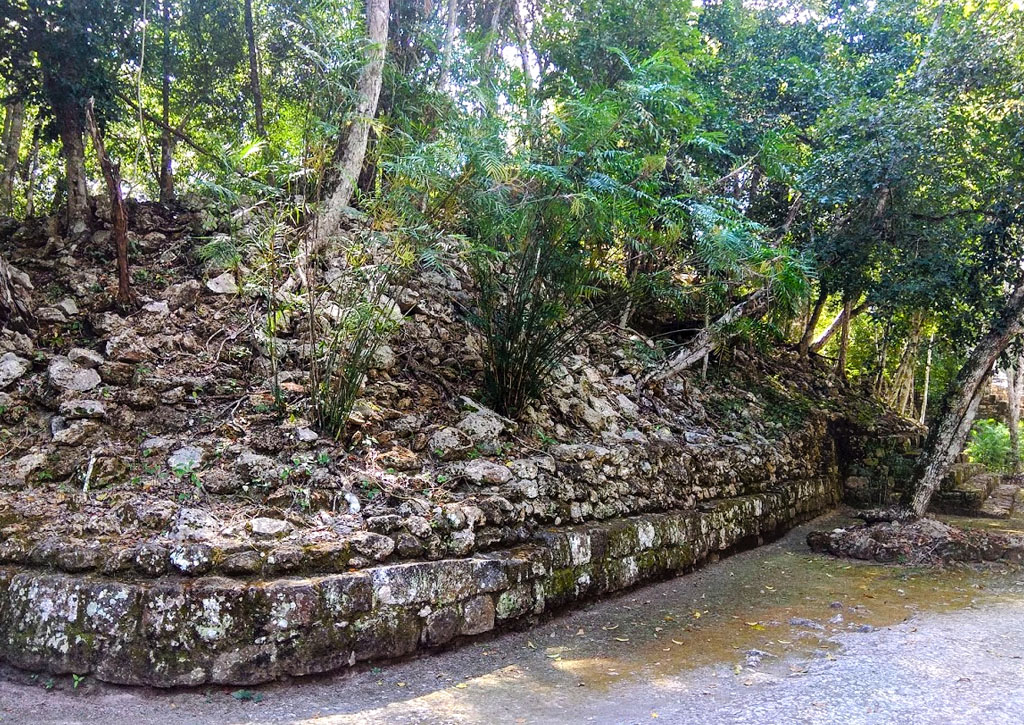
Minanbé, a name derived from the Yucatec Maya words mina’an, meaning “there is no,” and be, meaning “road,’ has emerged from the dense jungle of the Calakmul Biosphere Reserve in the Mexican state of Campeche.
The 37-hectare or 91-acre site, which flourished during the Late Classic to Terminal Classic period between 600 and 900 CE, represents one of the most significant archaeological discoveries in recent years. Unlike many other Maya sites that have been looted over the centuries, Minanbé remains completely intact, offering researchers an unprecedented window into the final centuries of Maya civilization.
The discovery was made by an international team led by the Slovenian archaeologist Ivan Šprajc, affiliated with the Research Center of the Slovenian Academy of Sciences and Arts, and authorized by Mexico’s National Institute of Anthropology and History (INAH). The find culminates three decades of research during which Šprajc has identified more than 80 Maya sites across the largely unexplored Central Maya Lowlands of the Yucatán Peninsula. Among his previous discoveries are the nearby sites of Chactún, reported in 2013, and Ocomtún, discovered in 2023.